26 Days
200 Hour Yoga Teacher Training in Rishikesh
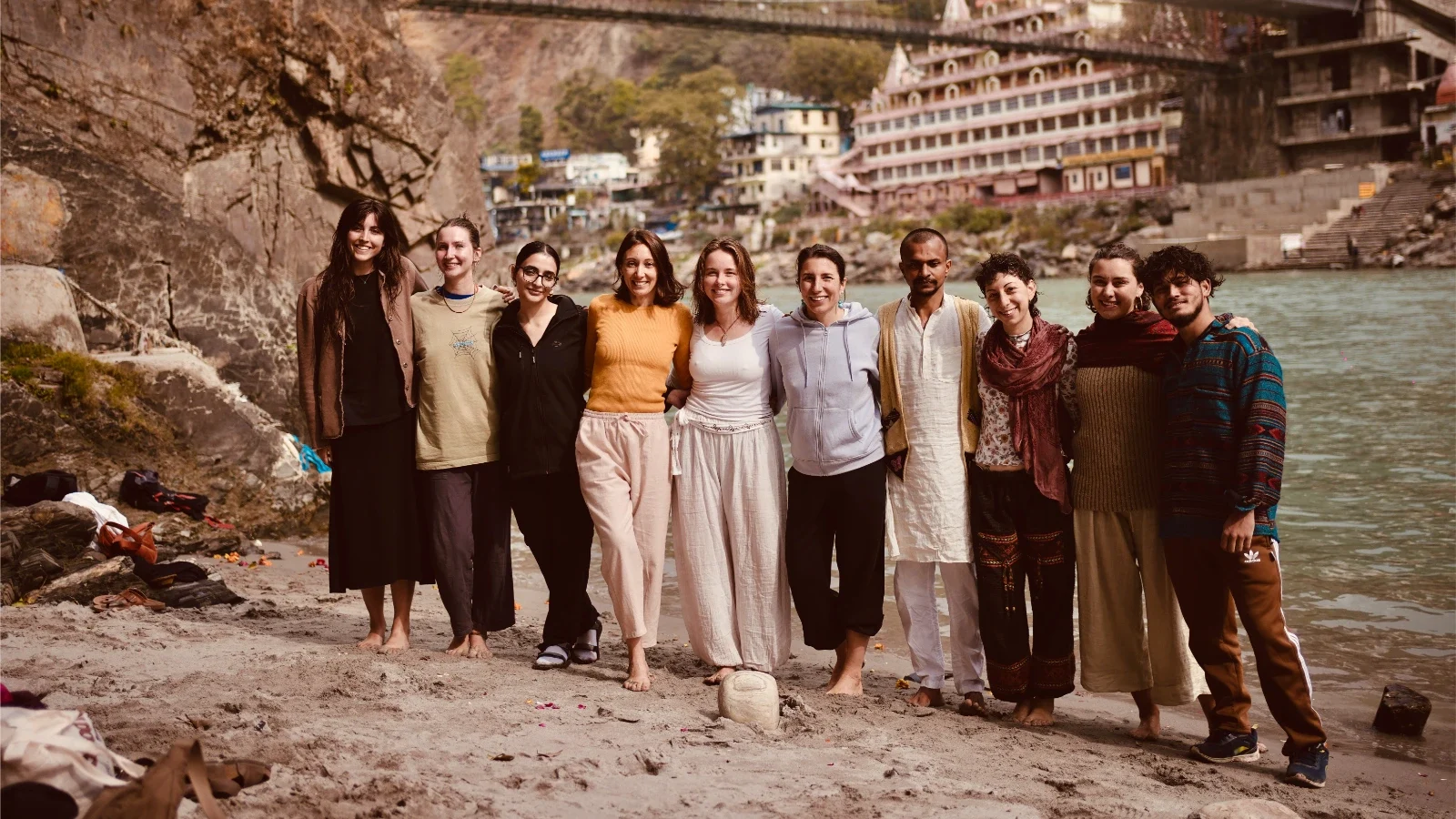
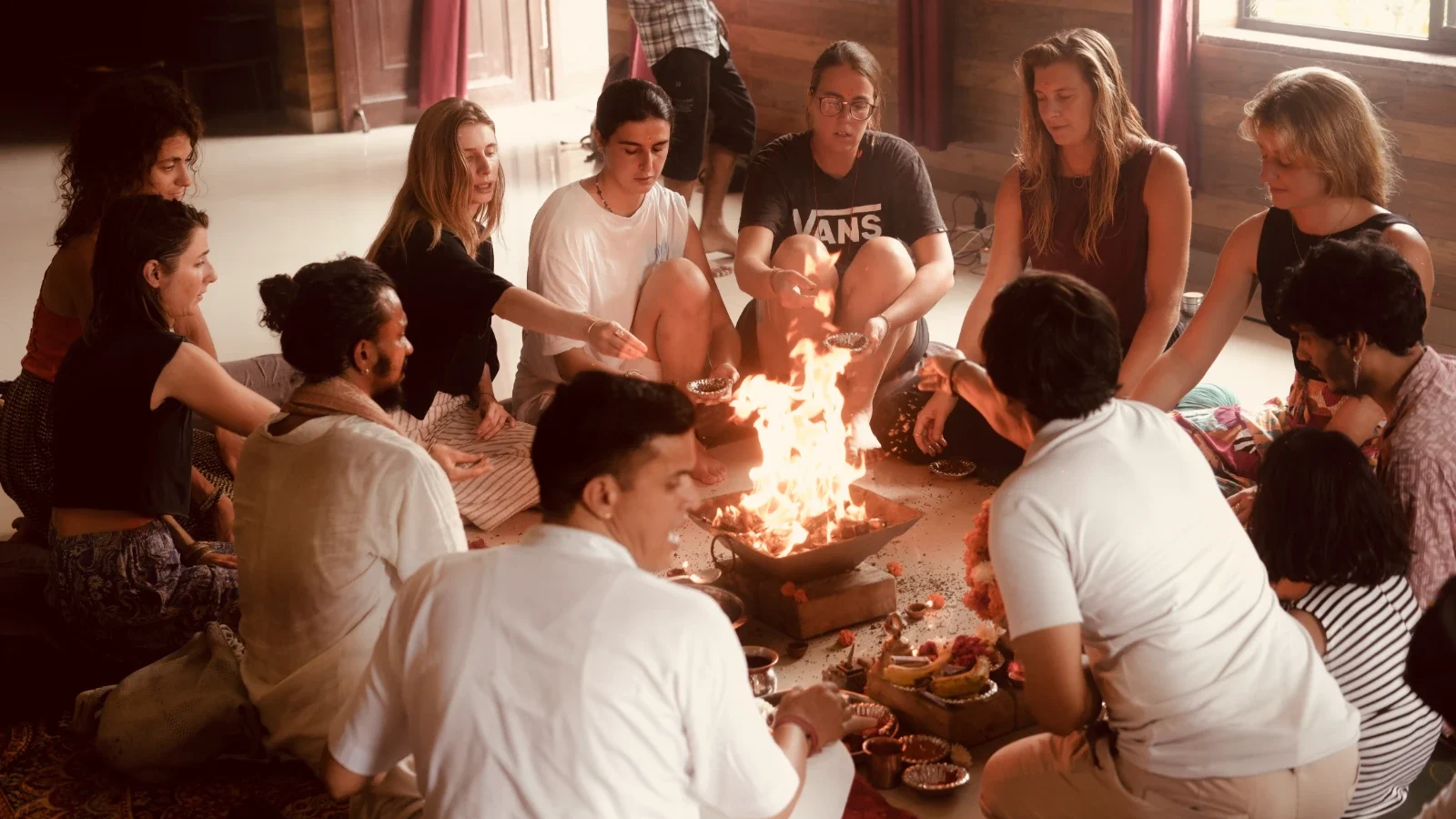
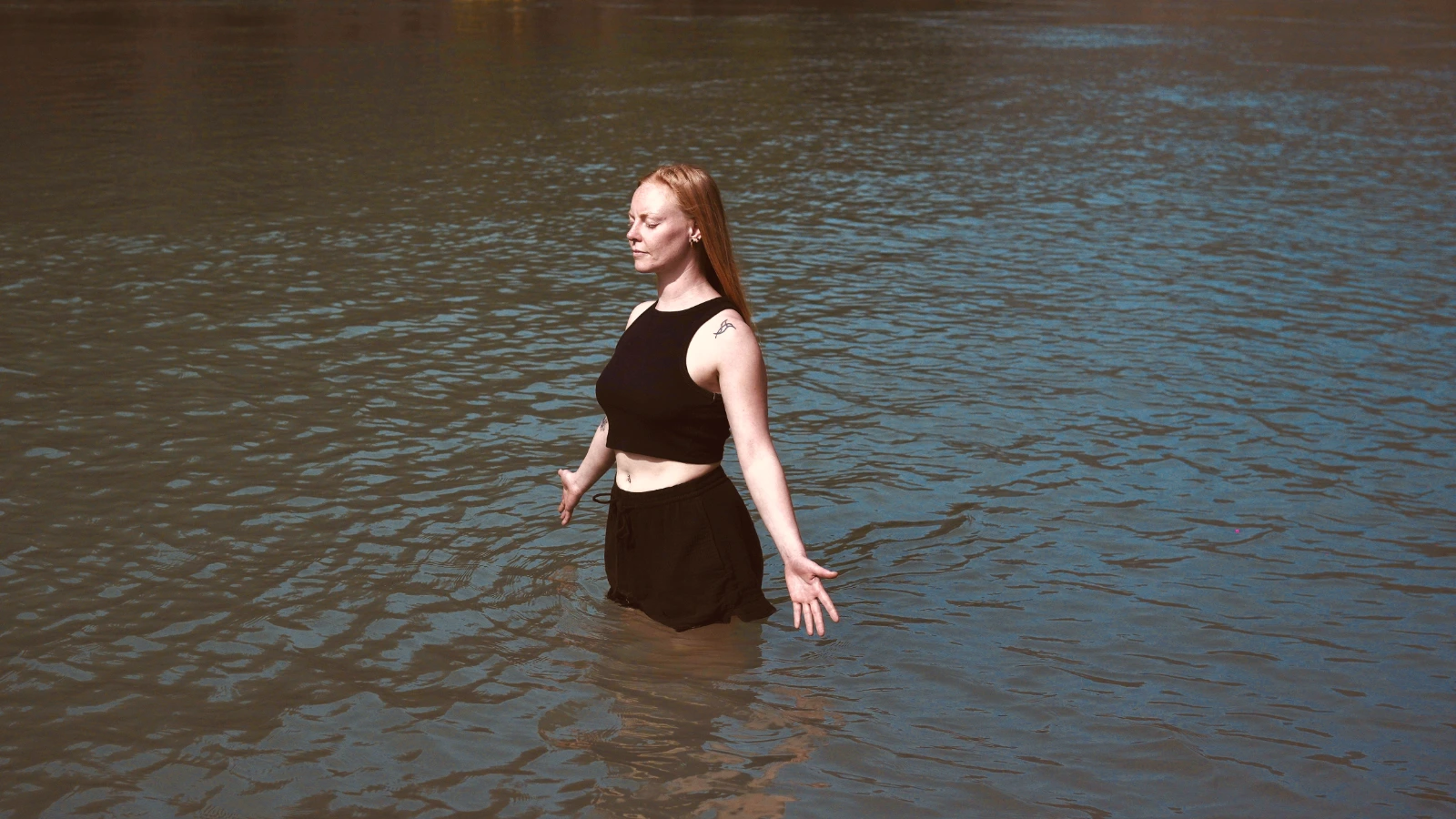

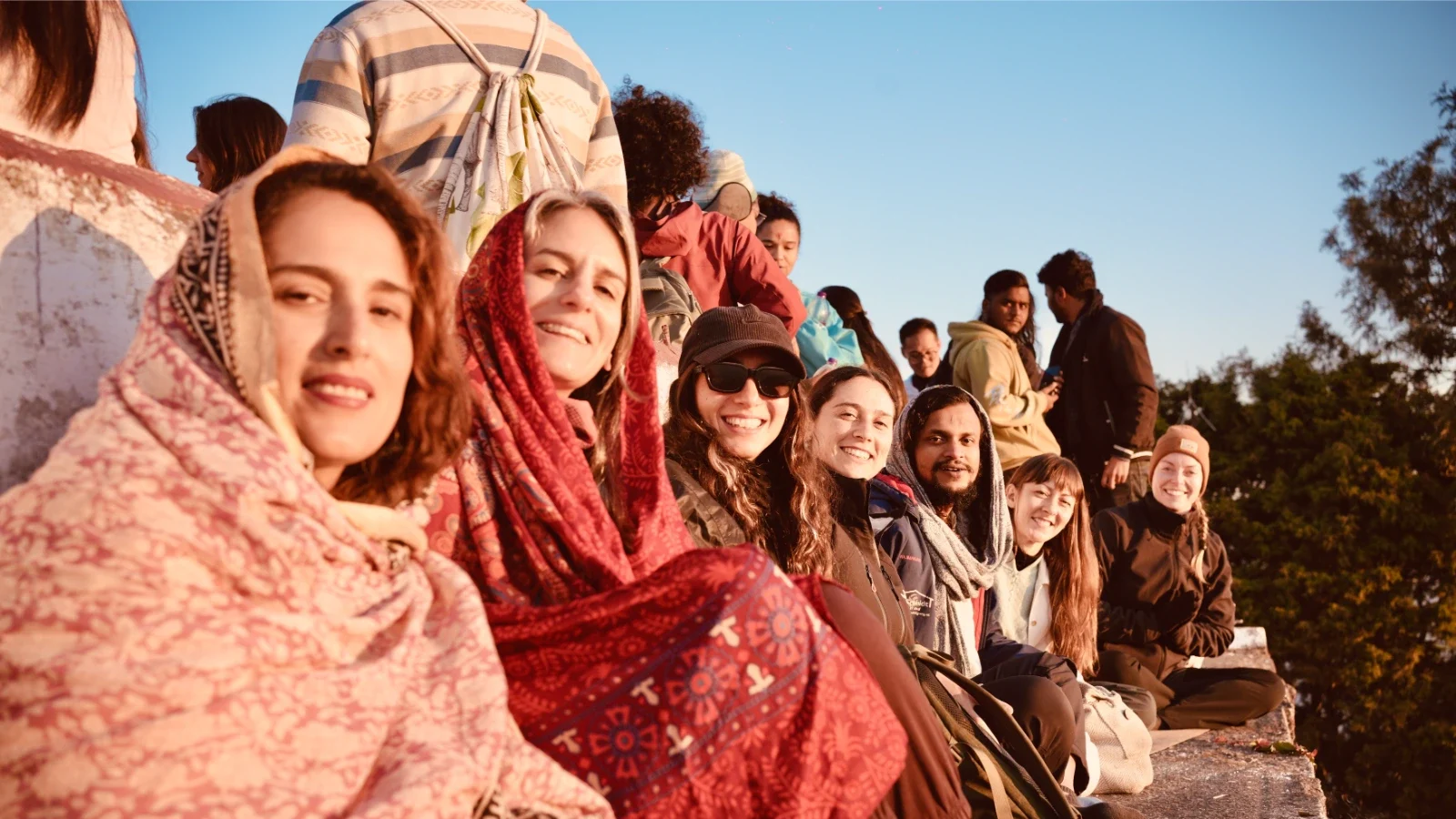
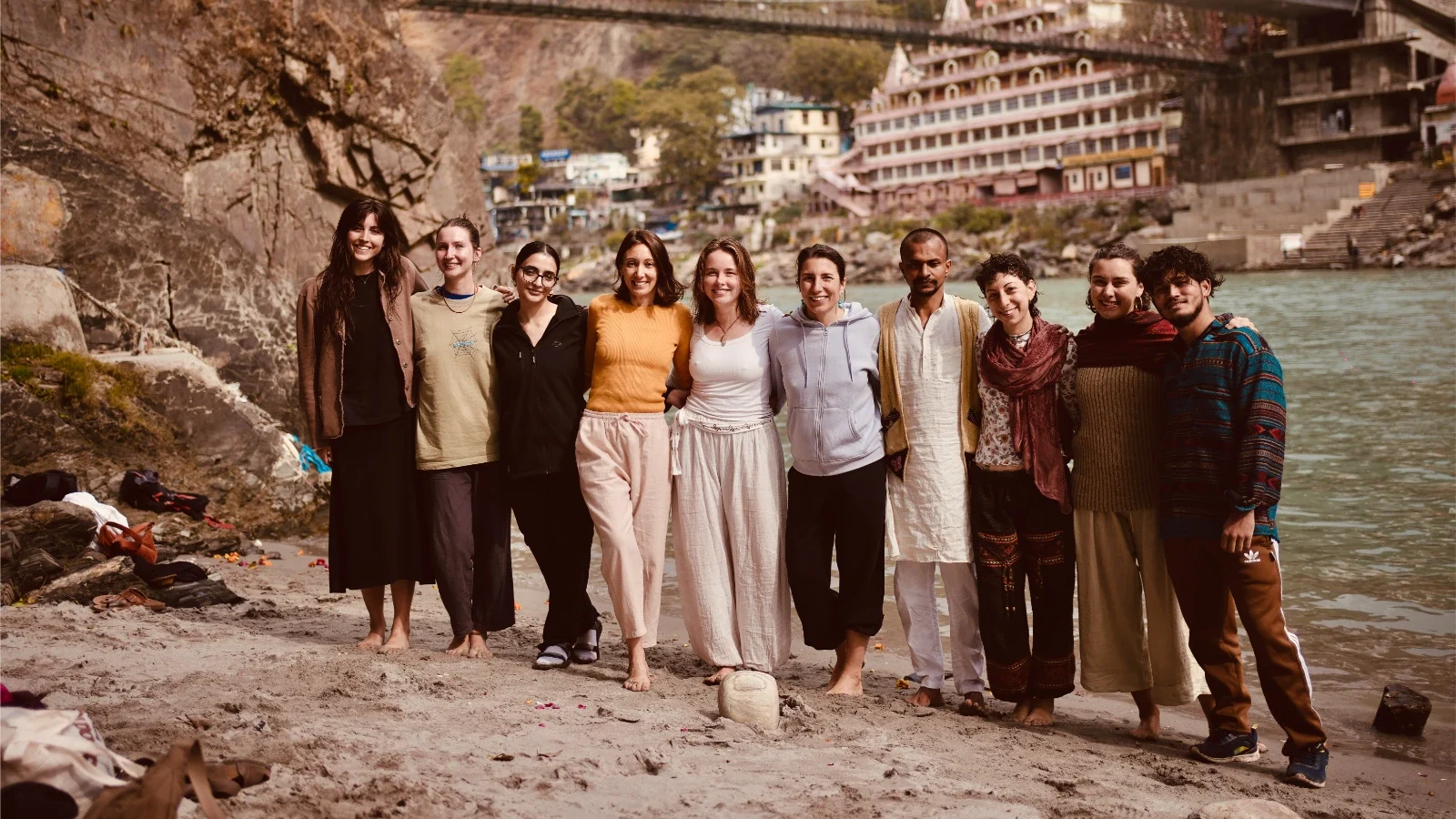
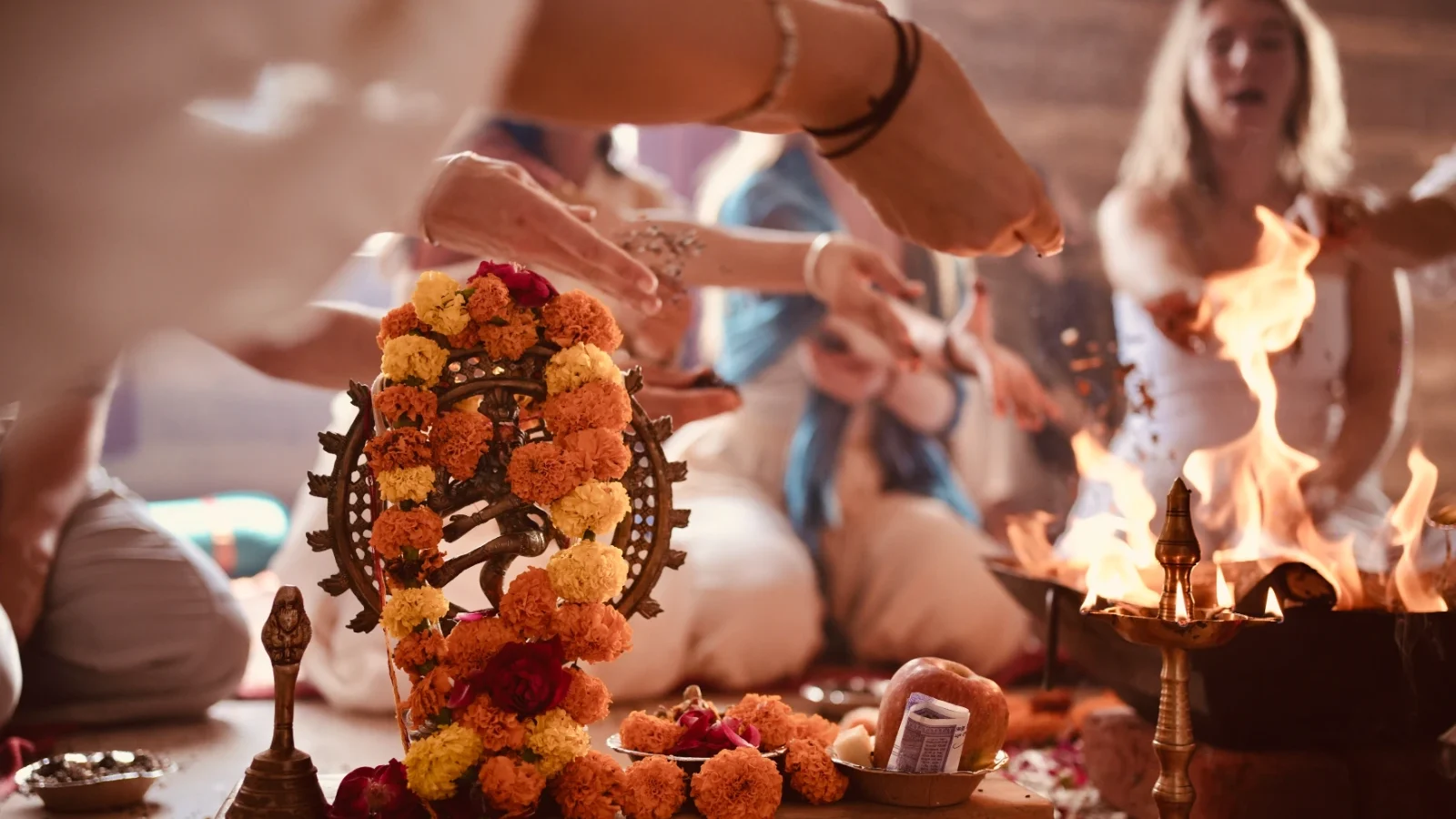
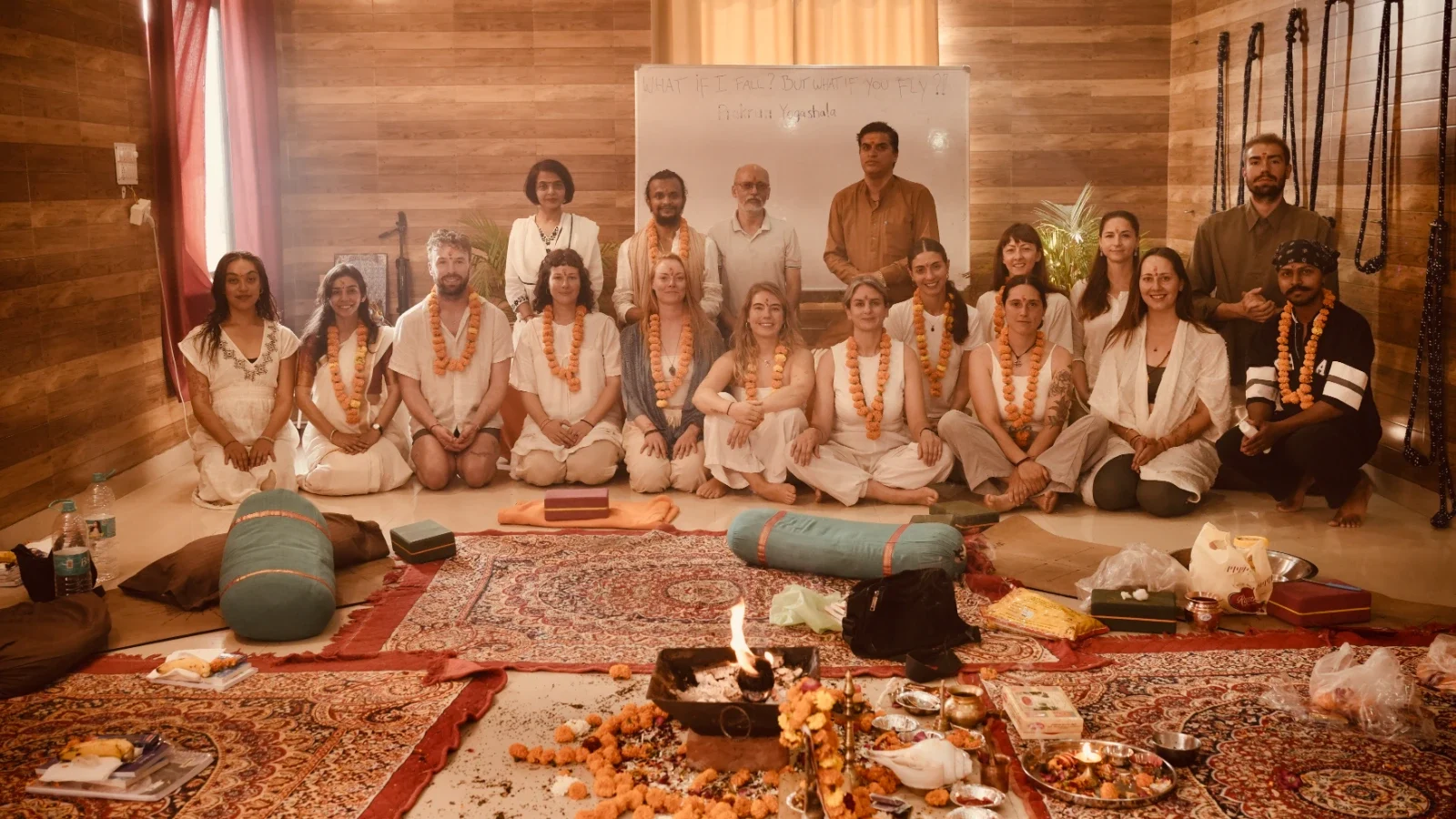
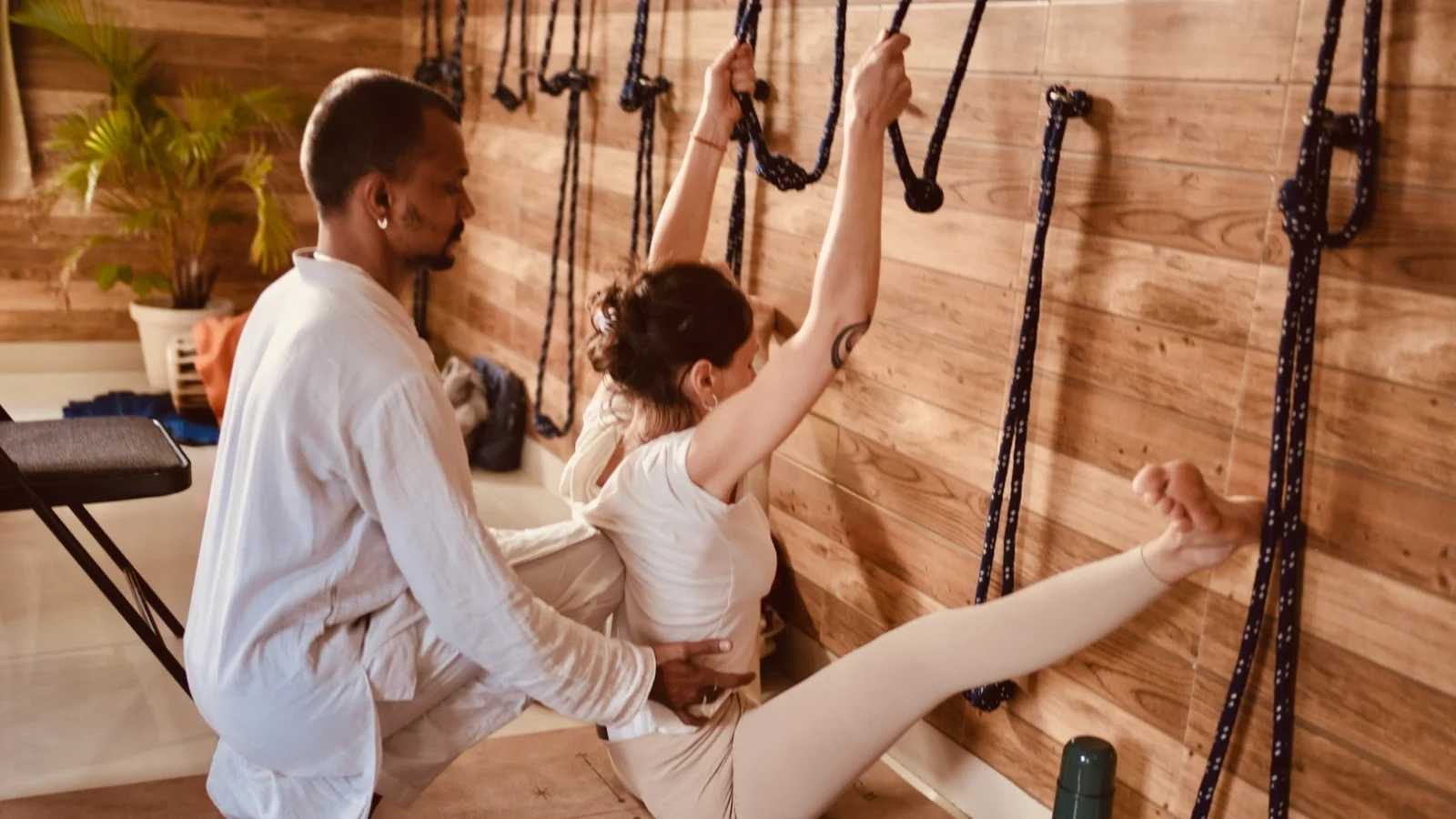
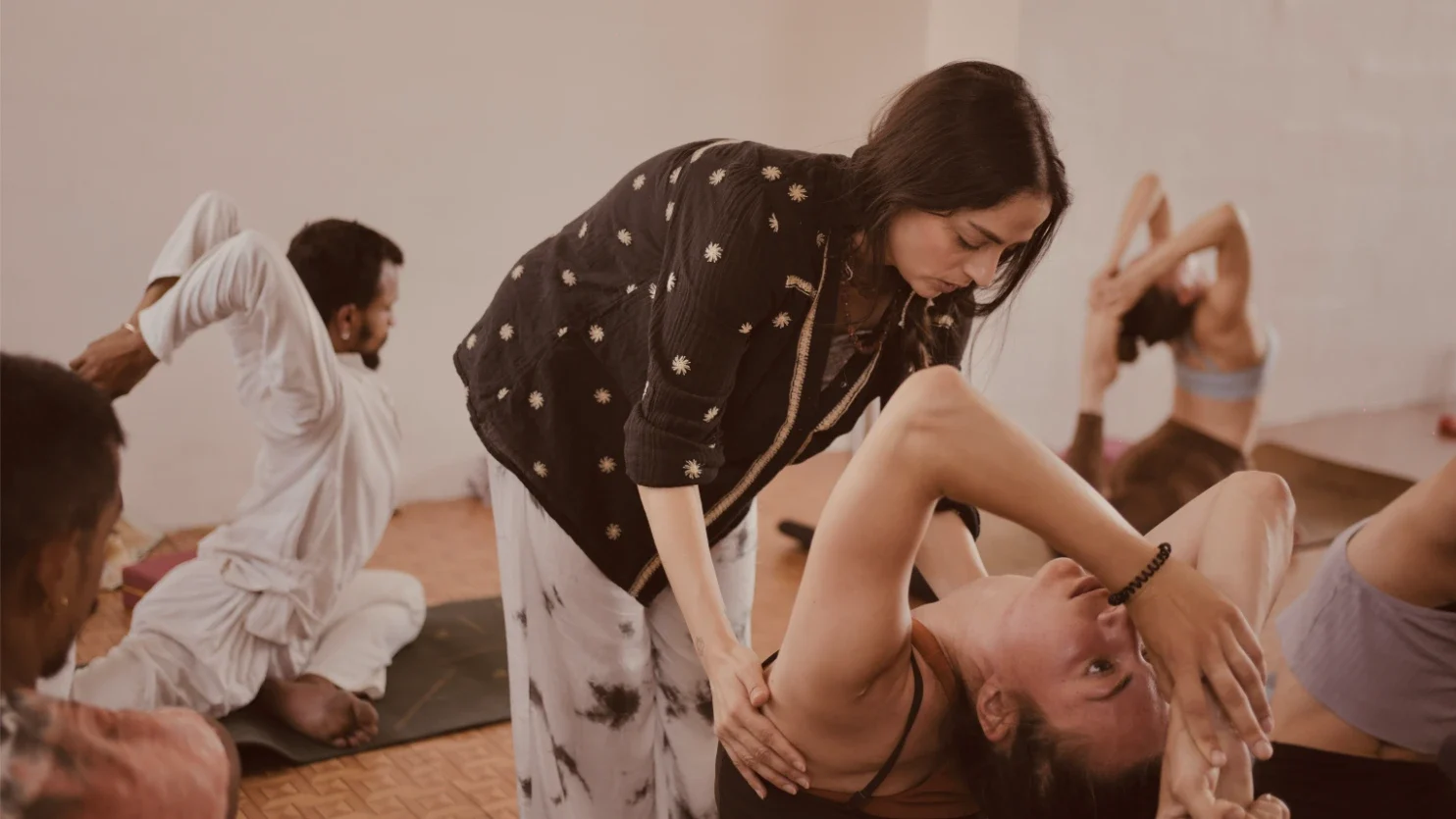
The 200-Hour Yoga Teacher Training is Prakruti's signature program: 26 days covering asana, pranayama, philosophy, anatomy and a full teaching practicum, leading to Yoga Alliance certification as a Registered Yoga Teacher.
The Curriculum
The program is organised around nine areas taught as one connected path rather than separate subjects: asana and alignment across Hatha, Vinyasa Flow, Yin, Restorative and Ashtanga; pranayama and meditation, from calming Yoga Nidra to energising Kapalbhati; yoga philosophy through the Yoga Sutras, Bhagavad Gita and Upanishads; Ayurveda and lifestyle, including a personal dosha assessment; Nada Yoga and mantra, including the sacred AUM and kirtan; anatomy and physiology, with safe modifications for common injuries; and teaching methodology, where every trainee teaches mini-classes to peers and receives real feedback.
A Day at the Ashram
Training follows a fixed daily rhythm: an early Hatha Yoga and alignment class, breakfast, Kundalini Yoga mid-morning, meditation and pranayama before lunch, an Ayurvedic lunch, an afternoon of alignment and adjustment work, a philosophy and Ayurveda session, self study, and an evening Ashtanga Vinyasa class before dinner and a homework period.
Certification
On completion, graduates are certified through Yoga Alliance and eligible to register as a 200-hour Registered Yoga Teacher, recognised internationally.
Who This Course Is For
This program is built for anyone aiming to become an internationally certified yoga teacher, as well as committed practitioners who want the full depth of a 200-hour training even without a plan to teach professionally. Batches are capped at 15 students, so every trainee receives real feedback rather than passing through unnoticed.
Life at the School
Accommodation, three daily Ayurvedic meals, RO-filtered water, daily housekeeping and a free Dehradun airport transfer are included in every plan, shared or private room.
Yoga Philosophy
A wide range of practical and theoretical study: Yoga as a practical way of living, Samkhya philosophy, Jain Darshana for a precise understanding of karma, and the wisdom of the Upanishads. Nada Yoga, the yoga of sound, receives special emphasis through the sacred practice of chanting Aum.
- History of yoga
- Yoga Sutras of Patanjali, chapters 1 and 2
- Types of yoga
- The Eight Limbs of Yoga: Yamas and Niyamas
- Philosophy behind Asanas
- Concentration (Dharana) and its power
- The Universe (Brahman)
- Kundalini
- Chakras
- Karma from Jain Darshana
- Aspects of mind through yoga and Samkhya darshan
- Knowing the mind, ego, intellect and consciousness
- Samadhi
- Introducing the Bhagavad Gita
Hatha Yoga
Techniques of Hatha Yoga to stabilize and unlock different movements of the body, using props to open the breath. Once the breath is open and stabilized, meditation becomes a natural state.
- Understanding and unlocking different movements of the body
- How the palms control the upper body and the feet the lower body
- The relationship between breath and movement
- Key sequences: hip opening, backbend, back-ache relief, restorative, arm balancing, forward fold, warrior, inversion
- Yogic jogging
- Use of props: chair, belt, block, bolster, ropes
- Bandhas, the bio-energetic locks
Pranayama
The fire of pranayama purifies mind, body and speech. Pranayama practice also increases digestive fire, mental power and general well-being.
- Mudras and bandhas
- Yoga cleansing Neti (jal, rubber)
- Kapalbhati
- Trataka
- Agnisar Kriya
- Anulom Vilom
- Shatkarmas
Yoga Nidra
One of the first things in a yogi's journey is learning how to relax. Yoga Nidra helps reach higher states of consciousness with the power to heal.
- Basics and science of Yoga Nidra
- The four states of consciousness
- Basic and tension relaxation
- Full body relaxation
- Sleep control
Mantra Chanting
The practice of mantra tunes body, mind and speech to a subtler frequency, purifying speech and building subtle awareness.
- Meaning of mantra
- Physiology of sound and vibration
- Origin and healing qualities
- Primordial sounds and their meanings
- Twenty powerful mantras, their chanting and meaning
- Kundalini meditation through mantra
Meditation (Dhyanam)
Meditation is the portal to samadhi, improving attention span, purifying the mind, and giving a sense of detachment through difficult moments.
- Breathing awareness and mindfulness
- Aum meditation
- Mantra meditation
- Trataka (candle gazing)
- Dynamic (Osho) meditation
- Nadabrahma meditation
- Tantric and Kundalini meditation
- Practicing silence
- Ajapa and Japa meditation
- Antar Mouna
Yoga Anatomy
The theoretical side of yoga postures and movement, so you understand what a posture is doing, avoid injury, and see the biomechanics behind it.
- Story of the evolution of structure
- Musculoskeletal system for asana practice
- Guidelines for asana anatomy and alignment
- Nervous system: sympathetic and parasympathetic
- Respiratory, circulatory, gastrointestinal and endocrine systems
- Nadis and chakras
Introduction to Indian Classical Arts & Music
Indian classical arts are designed to uplift the human condition, psychologically, physically and spiritually, and to support a meditative state of mind.
- The seven sounds of life
- Voice activation on the tanpura
- Practice of Om on the tanpura
- Meditation on ragas
- Nava rasa theory
Ayurveda
Tuning the body as the vessel of the self: what food fits you, your body type, your doshas, and how to understand and prevent imbalance.
- Prakriti and Vikriti
- Doshas and the Pancha Tatva
- Triguna and its relationship to food
- Ayurveda for daily life
- Ayurvedic Dinacharya (daily routine)
- Ayurvedic herbs for food and medicine
- The six flavors that affect consciousness
What is the 200-Hour Yoga Teacher Training course?
The 200-Hour Yoga Teacher Training is a comprehensive foundation course designed for aspiring yoga teachers and dedicated practitioners. It combines traditional yogic wisdom with practical teaching skills and is internationally recognized by Yoga Alliance.
What makes Prakruti Yogashala unique?
Prakruti Yogashala was among the first yoga schools in Rishikesh to introduce Sanskrit semantics as an integral part of its Yoga Teacher Training. Students also gain insights into Ayurveda, Indian philosophy, Naada Yoga, and traditional yogic knowledge alongside modern understanding.
Who can join this course?
Anyone with a genuine interest in yoga can enroll. Whether you're a beginner, intermediate, or advanced practitioner, no prior certification or teaching experience is required.
Is this course Yoga Alliance certified?
Yes. After successfully completing the course, you'll receive a Yoga Alliance recognized 200-Hour certification, making you eligible to register as an RYT-200 and teach internationally.
Which yoga styles are taught?
The curriculum includes Hatha Yoga, therapeutic/Iyengar Yoga, Ashtanga Yoga, Vinyasa Flow, Yin Yoga and Yoga Nidra.
What does the curriculum include?
A balanced blend of theory and practice: asana practice and alignment, pranayama and breathwork, meditation and Yoga Nidra, yoga philosophy, Sanskrit, Ayurveda, anatomy, teaching methodology, and Naada Yoga with Indian classical arts.
What yoga postures and sequences will I learn?
Students practice the complete Ashtanga Primary Series along with Surya Namaskar A and B, standing, seated, balancing, backbend, inversion and restorative postures, plus specialized sequences such as hip opening, warrior series and forward folds.
What will I learn in pranayama and meditation?
The science of breath, energy channels (nadis), chakras, mudras, bandhas, Kundalini concepts, meditation techniques, and traditional pranayama practices including Ujjayi, Kapalbhati, Nadi Shodhana, Bhastrika, Bhramari and Sheetali.
What teaching skills will I develop?
Teaching practice, demonstration, alignment and adjustment, class sequencing, voice and communication, student observation, time management and professional teaching methodology.
What will I gain from this course?
A strong foundation in yoga practice, philosophy, Sanskrit and Ayurveda, along with the confidence to teach professionally, deeper self-awareness and a more holistic understanding of traditional yoga.
How long is the course?
The 200-Hour Yoga Teacher Training is a 26-day residential program conducted at Prakruti Yogashala in Tapovan, Rishikesh.
Can I teach after completing the course?
Yes. Upon successful completion and certification, you'll be qualified to teach yoga in studios, wellness centers, retreats, corporate settings, or begin your own independent teaching journey.
How are students evaluated?
Through teaching practice, written and oral examinations, attendance, practical performance, and overall conduct throughout the course.
What kind of guidance can I expect?
Experienced teachers provide personalized guidance, hands-on support, and constructive feedback throughout the training to help every student progress confidently.
Why are Indian classical music and Naada Yoga included?
Naada Yoga explores the transformative power of sound. Classical Indian music is used to calm the mind, improve concentration, cultivate inner awareness, and deepen meditation by connecting students with the yogic understanding of vibration and consciousness.
| Time | Activity |
|---|---|
| 5:30 AM | Morning Bell |
| 6:30 – 7:30 AM | Shatkarma & Pranayama |
| 7:30 – 8:00 AM | Self Practice |
| 8:00 – 8:45 AM | Vocal Activation |
| 9:00 – 10:30 AM | Hatha Yoga & Alignment |
| 10:00 – 11:00 AM | Breakfast |
| 11:30 AM – 12:30 PM | Yoga Philosophy |
| 12:30 – 1:30 PM | Lunch |
| 1:30 – 2:45 PM | Self Study / Ayurveda |
| 2:45 – 3:45 PM | Yoga Anatomy |
| 4:00 – 5:30 PM | Hatha Yoga & Alignment |
| 5:30 – 6:30 PM | Meditation |
| 6:30 – 7:30 PM | Dinner |
| 10:00 PM | Lights Off |