
2026-08-17
Nadi Shodhana Pranayama: Finding Balance Through Alternate Nostril Breathing
What Is Nadi Shodhana?
This practice sits in the same library as an introduction to pranayama.
In Sanskrit, nadi means channel, and shodhana means purification. So Nadi Shodhana literally means cleansing the channels.
According to yoga philosophy, subtle energy, or prana, moves through these invisible channels. Two of the main ones are:
- Ida nadi: the cooling, lunar, feminine energy on the left side.
- Pingala nadi: the warming, solar, masculine energy on the right side.
When these two are out of sync, we might feel anxious, dull, tired, or restless. When they flow evenly, we feel balanced, peaceful, and clear-headed. Nadi Shodhana helps our breath and energy find its natural rhythm again.
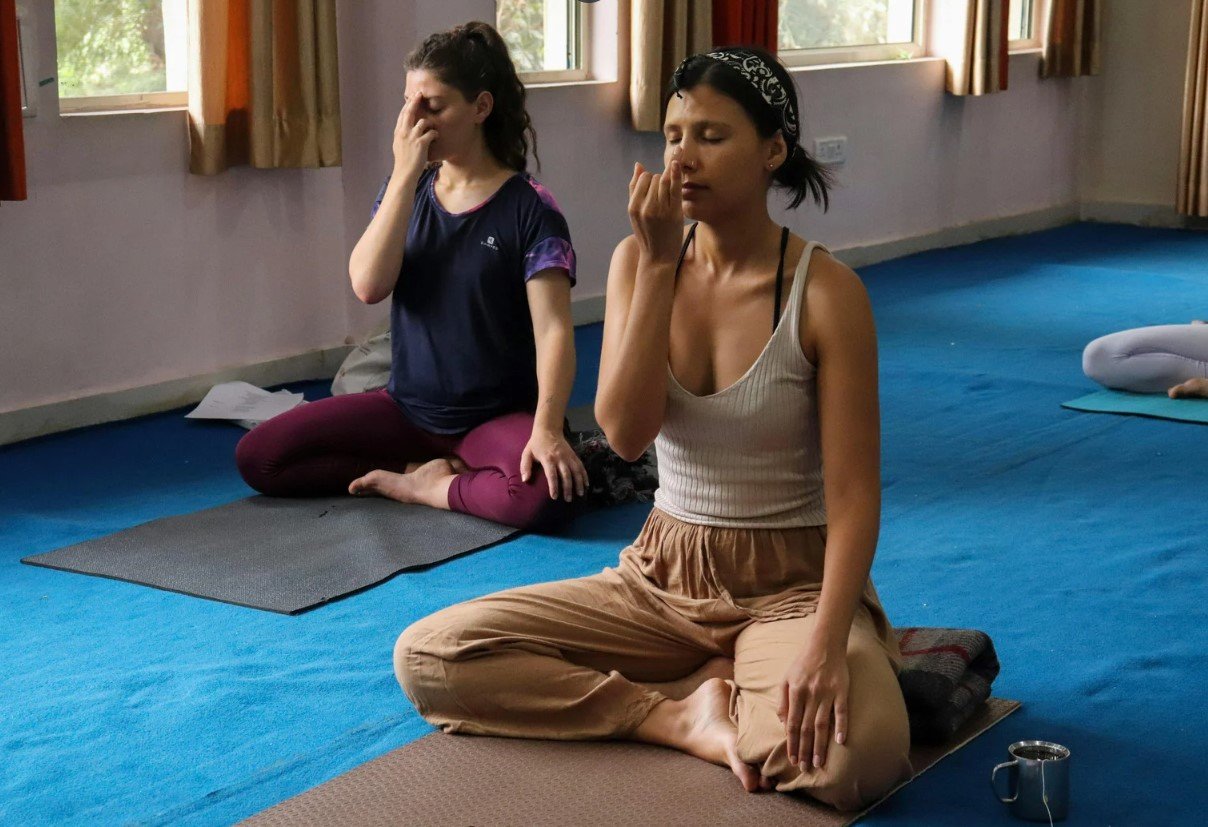
How to Practice Alternate Nostril Breathing
You do not need special equipment, just a quiet spot and a few minutes. Here is a simple way to begin.
- Sit comfortably with your spine tall and shoulders relaxed.
- Rest your left hand on your knee, palm open.
- With your right hand, fold your index and middle fingers down (this is Vishnu Mudra).
- Close your right nostril with your thumb and inhale through the left nostril slowly.
- Close your left nostril with your ring finger, open the right, and exhale through the right.
- Now inhale through the right, close it, and exhale through the left.
That is one full round. Continue for about 5 minutes, breathing gently and evenly. You will feel the mind quieting and the breath smoothing out, like a wave settling after a storm.
Check out our 300-hour yoga teacher training in India.
Nadi Shodhana Benefits
Alternate nostril breathing has profound effects on our nervous system and emotional well-being.
- Reduces stress and anxiety: slows the breath, calming the racing mind.
- Balances the nervous system: harmonizes the body's rest-and-digest and fight-or-flight responses.
- Improves focus and clarity: especially helpful before meditation or work.
- Supports emotional balance: helps regulate mood swings and restlessness.
- Enhances lung capacity: keeps respiratory passages open and healthy. Consistent practice often leads to better sleep and deeper relaxation.
Balancing Ida and Pingala: The Inner Dance
Have you noticed one nostril often feels more open than the other? That is your ida and pingala shifting naturally throughout the day.
When ida dominates, you feel calm but possibly sluggish. When pingala dominates, you feel active but can become agitated.
True balance is about helping them flow together. This is the quiet magic of Nadi Shodhana: it reconnects the lunar and solar sides of you, helping you feel centered in both action and rest.
Frequently Asked Questions
When should I practice Nadi Shodhana? Morning is ideal, or anytime you need to reset. Avoid practicing right after eating.
Can beginners try this safely? Yes, just breathe gently. Never force the breath or hold it too long.
How long should I practice daily? Start with 5 minutes and gradually extend to 10 to 15 minutes as you feel comfortable.
When the breath is steady, the mind becomes clear, as the Hatha Yoga Pradipika reminds us.
To learn more about Nadi Shodhana Pranayama, visit the best yoga school in India and join a 200-hour yoga teacher training in India.
A natural next practice to read is Ujjayi Pranayama, or Bhramari, the humming bee breath.