
2026-08-17
Safe Practice and the Anatomy of Forward Bends
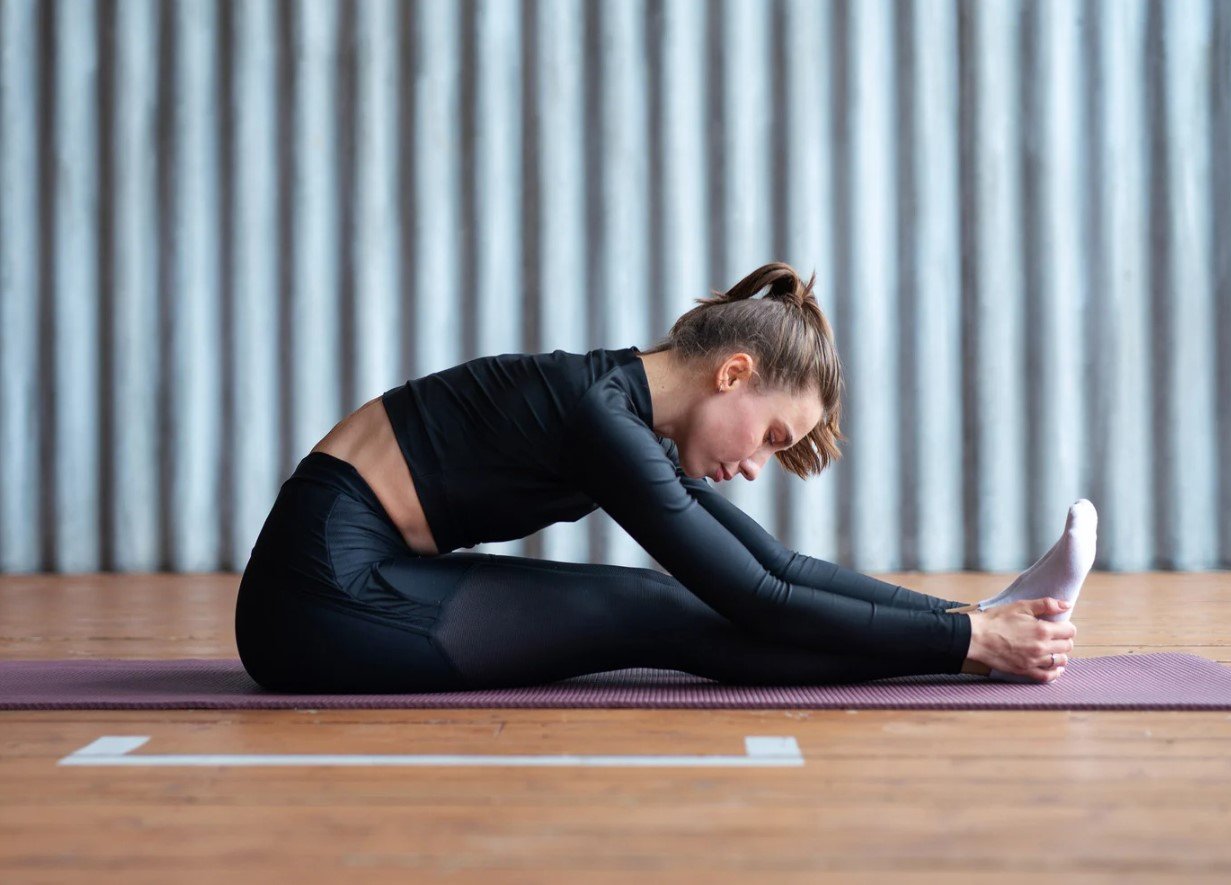
Many students begin their yoga practice thinking a good forward fold means the forehead touching the knees, and push toward the floor until the hamstrings protest and the breath disappears. Forward bends are not about reaching forward. They are about turning inward.
What Happens When You Fold
Forward bending asanas, such as Uttanasana (Standing Forward Fold), Paschimottanasana (Seated Forward Bend) and Janu Sirsasana (Head-to-Knee Pose), share one intention: to lengthen the back body while softening the front. When you hinge at the hips and let the spine round naturally, several things happen at once.
- The nervous system calms, as the gentle inversion lowers heart rate and blood pressure.
- The breath deepens with each exhale.
- The hamstrings lengthen gradually, releasing tension that travels up the back.
- The spine decompresses.
Slow, mindful stretching is known to support the parasympathetic nervous system and reduce stress hormones, so every forward fold is, in a physiological sense, teaching the body how to relax.
Anatomy in Motion
A few principles matter most in forward bends. Start the movement from the pelvis, not the waist, as if the hips were hinges. Engage the core lightly to support the lumbar spine. Bend the knees if needed, since a straight leg is not a sign of progress and a relaxed breath is. Keep the neck soft and let the head hang naturally. Feel the stretch distributed along the whole back line, from calves to crown, rather than concentrated in one spot.
Common Mistakes
The most common error is forcing the fold: pulling down with the hands or holding the breath to go deeper, which makes the body tighten in defense. Locking the knees is another, since it disconnects the pose's energy and compresses the lower back. And judging the pose by how it looks rather than how it feels pulls attention away from the practice itself. Every spine curves differently and every hamstring tells its own story.
A Gentle Home Sequence
- Cat-Cow, to wake the spine with breath.
- Adho Mukha Svanasana (Downward Dog), to lengthen the back body.
- Ardha Uttanasana (Half Lift), to strengthen the hinge.
- Paschimottanasana (Seated Forward Bend), folding slowly with eyes closed.
- Balasana (Child's Pose), to rest and absorb.
Forward bends are covered in depth, alongside safe alignment principles for the full asana library, in our 200-Hour Yoga Teacher Training and 300-Hour Yoga Teacher Training.