2026-08-17
Quieting the Mind: Relaxation Asanas for the Days We Need to Let Go
When the Mind Won't Quiet
Not long ago, I caught myself lying awake at midnight, body tired, mind racing. I had scrolled through emails, replayed conversations, even thought about what to cook the next day. My body wanted rest, but my nervous system was wired.
This practice sits in the same library as the yogic approach to advanced poses.
Instead of fighting, I unrolled a blanket on the floor, set two pillows by my sides, and lay back in Supta Baddha Konasana (Reclined Bound Angle Pose). Within minutes my chest expanded, my breath deepened, and that heavy, frantic hum began to dissolve.
That is the quiet power of relaxation asanas, they do not erase life, but they teach us to carry it differently.
Why These Poses Matter
Most people picture yoga as movement, strength, or balance. But hidden in its heart are practices that do the opposite: they invite us to stop doing. Restorative shapes, held with support, tell the body and mind it is safe to let go.
Science is beginning to affirm what yogis always felt. Supported postures and slow breathing can shift the nervous system into rest and digest, lowering heart rate, soothing blood pressure, even helping regulate stress hormones. Yet beyond research, the proof is personal: jaw unclenching, thoughts softening, that small inner sigh that says, finally.
Join our 200-hour yoga teacher training in Rishikesh.
Five Gentle Asanas for Everyday Renewal
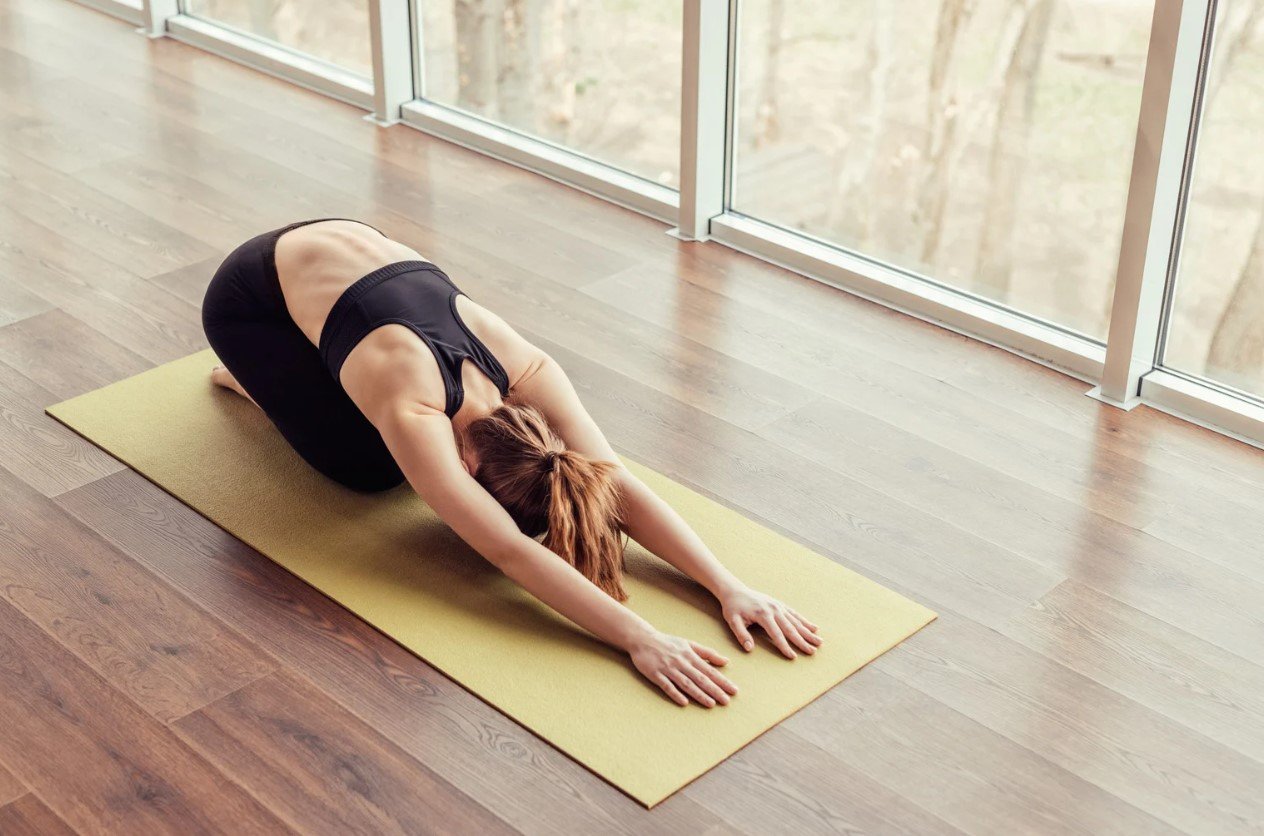
1. Child's Pose (Balasana). Knees wide, belly sinking, forehead resting on a blanket. Arms can reach forward or fold back. It feels like curling into yourself, a reminder of safety.
2. Reclined Bound Angle (Supta Baddha Konasana). Lie back, soles of feet together, knees open. Support them with cushions. This shape opens the hips and invites deeper belly breathing. Try placing a hand on your heart here.
3. Legs Up the Wall (Viparita Karani). So simple, so effective. Resting with legs upright calms circulation and melts fatigue. Ten minutes can feel like a reset button.
4. Supported Supine Twist. Knees drop to one side, head turns opposite, cushion under your knees. Like wringing out tension, physical and emotional.
5. Savasana with Bolster. Not just lying down. With props, it becomes a ceremony of surrender. Bolster under knees, blanket over belly, eye pillow on, rest becomes sacred.
Bringing Them Into Your Day
Workday pause: Legs Up the Wall for five minutes can refresh more than caffeine.
Bedtime ritual: Child's Pose and Savasana prepare the body for sleep.
Moments of overwhelm: Reclined Bound Angle opens the chest for fuller, calmer breaths.
Think of these not as workouts, but bookmarks in your day, tiny pauses to anchor presence.
Quick Reference
- Child's Pose: soothes anxiety and a tight back; support with a blanket under the forehead.
- Reclined Bound Angle: opens the hips and shallow breath; support with cushions under the knees.
- Legs Up the Wall: eases fatigue and circulation; support with a blanket under the hips.
- Supine Twist: soothes the spine, digestion, and stress; support with a pillow under the knees.
- Savasana with Bolster: releases whole-body tension; support with a bolster and an eye pillow.
Common Questions
Which is best for beginners? Legs Up the Wall. Simple, fully supported, and instantly calming.
How long should I stay? Start with 3 to 5 minutes. If it feels nourishing, linger 10 to 15.
Can this help with sleep? Yes, especially when paired with slow exhalations. Many people find it reduces bedtime restlessness.
A Gentle Invitation
We live in a culture that celebrates busyness, but healing often begins in stillness. These poses are not about performance, they are about remembering how to rest.
If you would like to explore deeper, our Yoga Teacher Training in Rishikesh turns these simple shapes into soulful rituals, rituals that nourish not only the body, but the heart and spirit too. Because rest is not a luxury. It is medicine.
A natural next practice to read is the Padmasana group of asanas, or the deeper meaning of Padmasana.